 Dennis Collaris

 design, code
Xaiva
2024, 15 JanXaiva is the AI human-oversight platform I founded after my PhD, together with my cofounder David van Daalen. It builds on six years of academic research into explainable AI and visualization, packaging those ideas into a product that helps both technical and non-technical stakeholders understand and explain how machine learning models behave. The goal: get AI solutions to market faster through automated, standardized model explanations, while letting humans verify even the most complex models, increasing confidence and lowering reputational risk.
Why build it?
Towards the end of my PhD it became clear that the techniques we had developed to interpret black-box models were not just academically interesting; they were addressing a problem that businesses were starting to feel quite acutely. Black-box models are dangerous: they expose organizations to reputational damage when something goes wrong, and increasingly to regulatory non-compliance with the EU AI Act on the horizon. The Dutch toeslagenaffaire made it concrete how badly things can go when opaque automated decision-making affects real people.
The hypothesis behind Xaiva was that this problem could be solved through interactive visualization. Rather than producing a single static report, the platform would let data scientists, model owners, ethics committees and regulators all interrogate a model from their own perspective: diagnosing issues, justifying decisions, and verifying behavior before models reach production.
Validating the idea
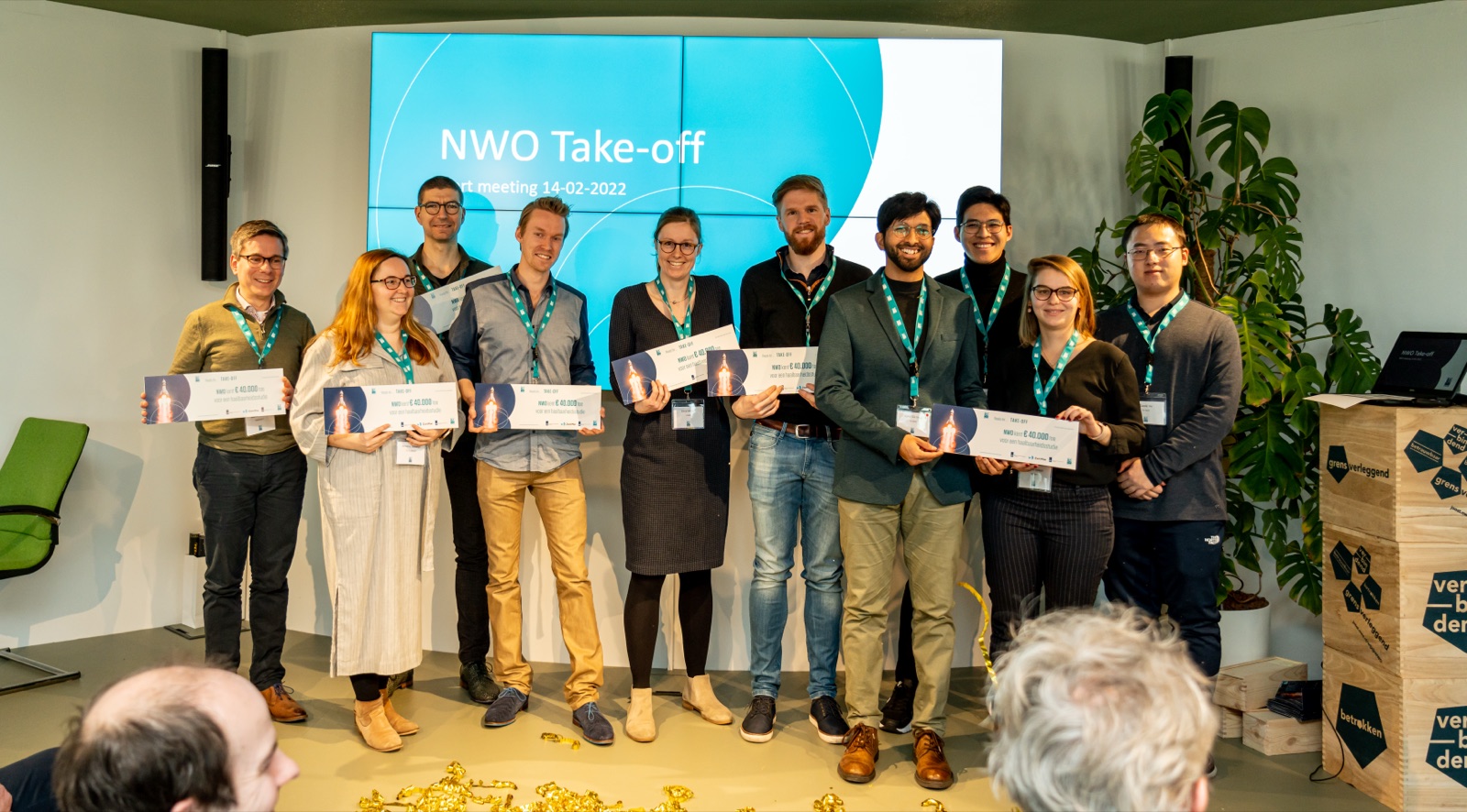
First we needed to validate and make sure we were solving a real problem. With support from a NWO Take-off phase 1 grant of €40.000 to validate feasibility, and following two startup readiness programs (GAME and SET), David and I conducted many customer interviews over two separate rounds.
The first round covered 22 data scientists across companies including ING, ABN AMRO, Achmea, Booking.com, Microsoft, Apple, Philips and Bol.com. The second round zoomed in on the financial sector, where high-stakes decision-making is common and the regulatory pressure is highest. We spoke to senior management and C-level executives at large banks and insurers, and to advisors and auditors of those organizations such as KPMG, Projective Group and the AFM.
Two findings stuck with me. First, data scientists themselves rarely consider the black-box nature of their models a problem; they are busy with data quality and deployment. The pain is felt one level up, by the data science management and risk officers who carry responsibility for the models. Second, in the financial sector that pain is real and consistent: every senior manager we spoke to worried about reputation and compliance, and several were actively looking for solutions.
On the road
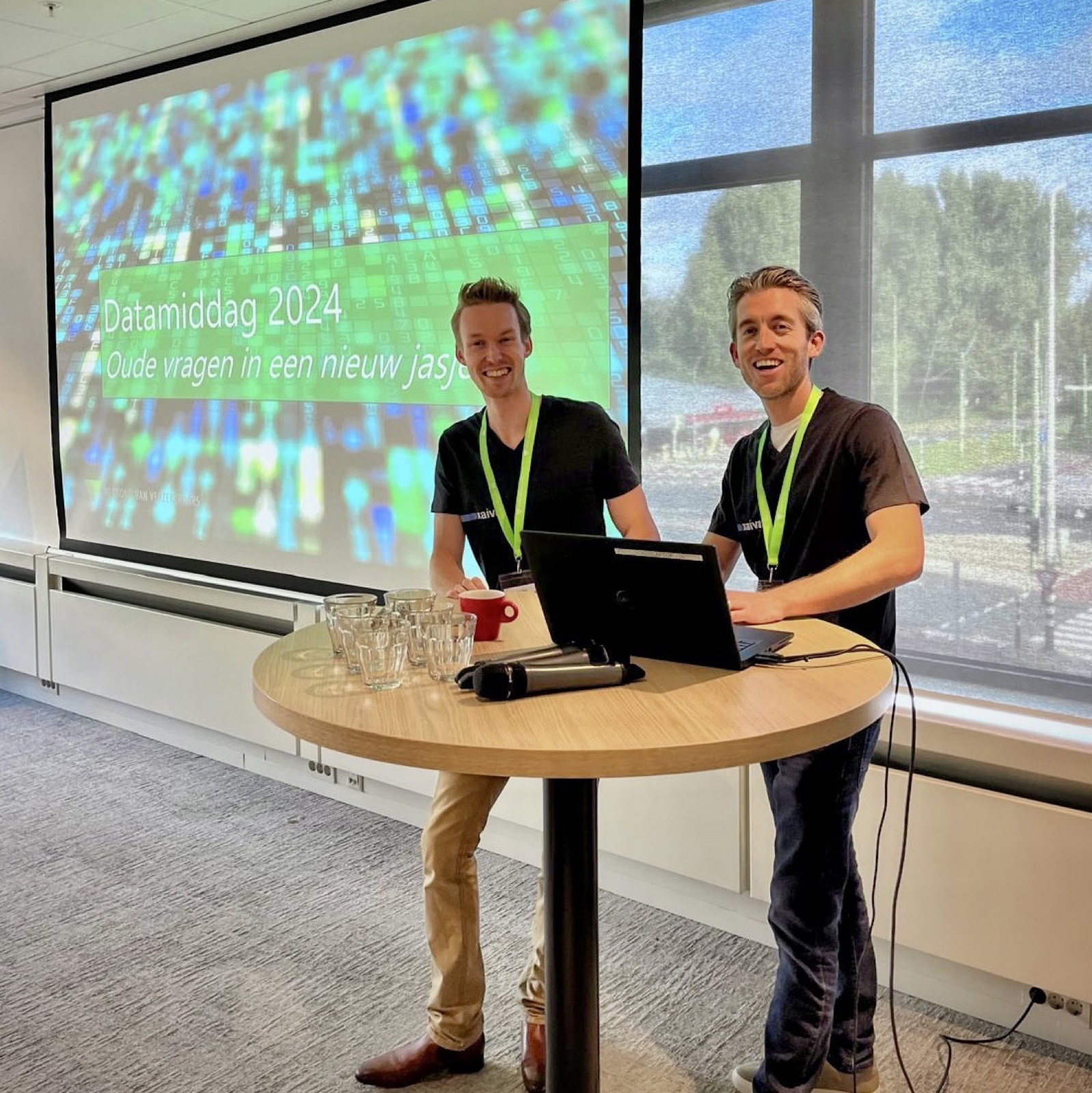
We presented to directors and CEOs of most of the large Dutch banks and insurers. We were invited to give a keynote at the internal Data Day of the Verbond van Verzekeraars, the trade association of all Dutch insurance companies, presenting our take on responsible AI to the entire sector at once. We also presented to the provence of Noord Brabant, covering many municipalities. Finally, we were invited to host a vendor stand at REAIM, the first international summit on Responsible AI in the Military Domain, in the World Forum of The Hague.
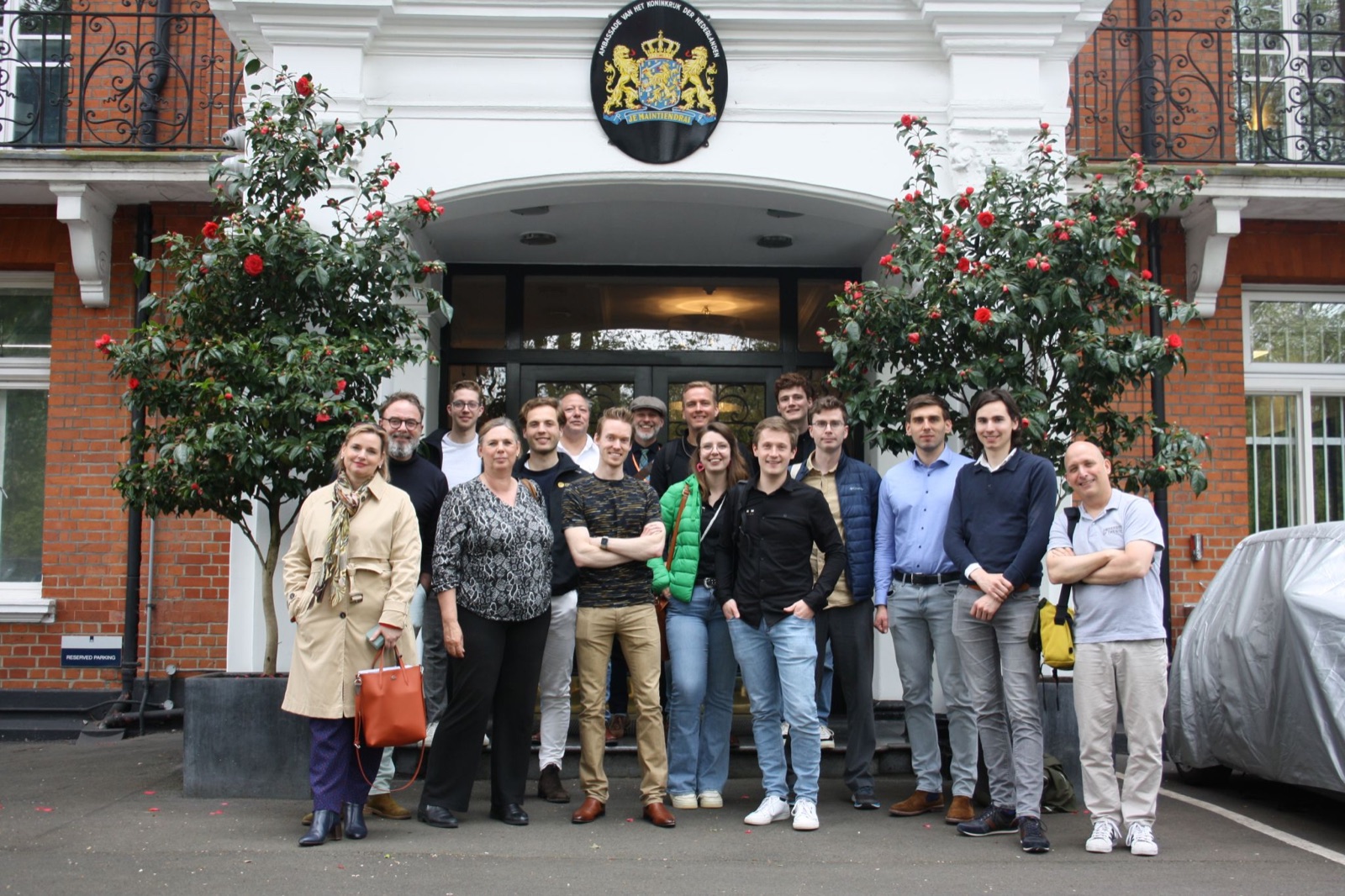
A particular highlight was being selected for a trade mission to London organized by 4TU.Startups, the joint startup initiative of the four Dutch technical universities (TU Delft, TU Eindhoven, Twente and Wageningen). Six other Dutch tech startups joined us on a packed program that ran across the week. We were challenged to “think big” at the Dutch Embassy in the UK with talks from Cristiano Betta and Lieke Conijn, presented at Imperial College London’s Enterprise Lab, and pitched Xaiva at the Royal Institution to a panel and audience of more than a hundred 4TU alumni based in London. In between we visited fellow deep-tech founders such as Monolith AI to learn about building tech startup.


Every talk and pitch sharpened the value proposition, gave us new contacts, and generated leads. By mid-2024 we had a solid pipeline of interested organizations and a clear sense of what they expected from a launching customer engagement.
The platform
Alongside the validation work, I built the platform from scratch. The system included user accounts and project management, the ability to upload and execute arbitrary ML models, and an interactive dashboard combining several state-of-the-art explanation techniques in a way that was genuinely usable for non-technical stakeholders. Many of the visualizations were direct descendants of those I had developed during my PhD in ExplainExplore and StrategyAtlas, now hardened, productized and integrated into a single workflow.
Data never leaves the customer
For our target market, handing production data to an external party is a unacceptable, hence Xaiva was built without ever needing it. Our backend only ever requires the model, which is sufficient for computing explanations. The dataset lives entirely in the browser, streamed directly from customer-owned storage, and any extra context the explanation needs (feature distributions, neighborhoods, global aggregates) are assembled there. As far as I know, no other explainability vendor at the time offers this.
PDF reports for management
A recurring theme in our customer interviews was the gap between data scientists, who understand their models in detail, and the management ultimately responsible for them. We built functionality to enable data scientists summarize their analyses inside the platform, and automatically export everything as a PDF report management can actually read. Managers reacted strongly to this in pitches.
Guided analysis
To make adoption easy, we tightly integrated walkthrough and guidance into the analysis flow. Rather than dropping users in front of a complex dashboard, the tool suggested what to look at next and helped interpret results along the way.
Each of these features were a direct response to a insights from customer interviews, and building the stack myself meant changes could land within days.
Real traction
The conversations turned into concrete opportunities at two organizations in particular.
At Achmea, senior management expressed early interest in trying Xaiva as part of an internal innovation project. Our existing relationship with the company through my PhD research and graduation project on fraud detection gave us a head start: they already knew the underlying methodology and trusted that the science was sound. We worked with innovation managers and enterprise architects to prepare a proof of concept project.
The most promising opportunity was at UWV, the Dutch agency that administers benefits to employees. UWV is exactly the kind of organization Xaiva was built for: a public body making high-stakes automated decisions where transparency and human oversight are not optional. We achieved something rare for a startup at this stage: alignment across every stakeholder group at once, from senior management and the data science team to ethics and the enterprise architect.
Stealth mode
While our champions from KPMG and UWV pushed hard, broader internal reorganization and discussions meant the proof-of-concept timeline kept slipping in ways nobody on either side could control. Rather than continue, David and I made a deliberate decision to pause the project and continue in stealth mode to wait for the right moment to launch.
That moment is, if anything, getting closer. The regulatory tailwind for explainable AI has only strengthened since we started. The EU AI Act has now been adopted, organizations across the public and financial sectors are working out what compliance looks like in practice, and the demand for human-oversight tooling is growing rather than shrinking. The platform exists, the IP is intact, the validation work and network are still warm, and the lessons about enterprise sales carry forward. Xaiva is built, tested in front of the right rooms, and ready for the right opportunity.